
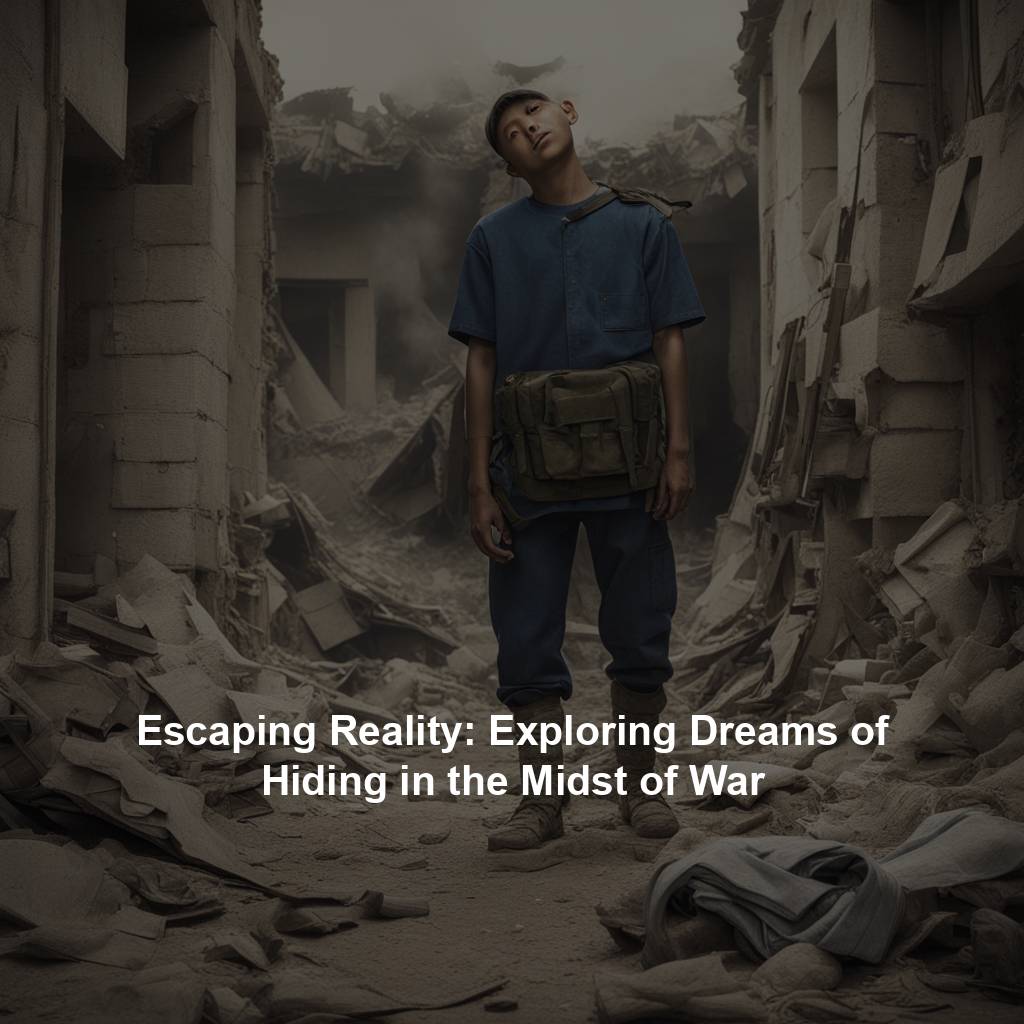
War is an inescapable reality that has plagued humanity for centuries. The chaos, destruction, and loss that accompany armed conflicts weigh heavy on the hearts and minds of those affected. In such dire circumstances, dreams of finding solace and safety in hidden realms emerge, offering a tantalizing escape from the horrors of war.
Amidst the chaos and uncertainty of armed conflict, individuals often yearn for refuge and tranquility. These dreams of hiding can act as a psychological coping mechanism, allowing individuals to momentarily slip away from the harshness of reality. By imagining hidden enclaves nestled amongst war-torn landscapes, people seek solace and a respite from the ever-present dangers that surround them.
An Exploration of Dreams
Within the realm of dreams, individuals find an outlet for their fears, insecurities, and desires. Dreams of hiding during wartime reflect a longing for security, peace, and a return to normalcy. In these dreams, secret caves, underground tunnels, or forgotten basements become sanctuaries away from the ravages of war, offering respite and a glimmer of hope.
Symbolically, dreams of hiding symbolize the human instinct for self-preservation and the longing for a sense of control. It embodies the primal need to protect oneself and loved ones from the imminent dangers and violence that pervade everyday life during wartime. These dreams allow individuals to regain a semblance of autonomy amidst the helplessness and chaos.
Understanding the Emotional Impact
Dreams of hiding in the midst of war carry significant emotional weight. They can reflect the deep-seated fears, traumas, and anxieties experienced by individuals enduring the horrors of conflict. By exploring these dreams, psychologists offer a means to delve into the emotional and psychological toll that war exacts on both combatants and civilians alike.
For those entrenched in actual armed conflict, dreams of hiding may serve as a desperate plea for a reprieve from the relentless violence and suffering. Each vision conjures an ethereal escape, granting temporary emancipation from the tragic reality. However fleeting, these dreams can provide a respite for the mind, allowing individuals to carry on with resolute determination and unwavering hope.
The Quest for Peace and Healing
While dreams of hiding in the midst of war offer solace, they also reflect the universal human yearning for peace. They symbolize an innate desire to live in a world free from conflict and violence. Recognizing and acknowledging these dreams can act as a catalyst for individuals, communities, and nations to strive towards lasting peace.
The healing process after war requires addressing the psychological wounds inflicted upon individuals. By understanding the dreams of hiding, mental health professionals, scholars, and policymakers gain invaluable insights into the lingering impact of war on the human psyche. Armed with this knowledge, they can work towards implementing comprehensive strategies that foster post-conflict healing, reconciliation, and a renewed hope for a peaceful future.
Embracing the Dreamscape for Renewed Hope
Dreams of hiding in the midst of war provide a unique window into the psychological landscape of conflict-ridden societies. By embracing and studying these dreams, we uncover the deepest aspirations of humanity: the desire for safety, security, and ultimately, peace. As we unravel the complexities of war-induced dreams, we inch closer to understanding the depths of the human experience in times of turmoil, and strive towards a future where dreams of hiding in wartime become a thing of the past.